

Critical Raw Materials
Platforms
Critical Raw Materials
Structural and Skills Gaps in Europe’s Critical Raw Materials Ecosystem
Introduction
This note synthesises insights from two Euro-CASE technical workshops focused on Europe’s critical raw materials (CRM) ecosystem. While the workshops addressed different aspects of the challenge – one examining system-level and policy considerations, and the other focusing on skills, education, and talent pipelines -common themes emerged across discussions.
The purpose of this note is to bring these insights together in a single, coherent view, highlighting areas of convergence and recurring challenges identified by participants. It is intended as a reflective summary of what was heard across the workshops, rather than a set of recommendations or policy positions.
Cross-cutting insights from the workshops
Insight 1: System capacity and skills capacity are tightly coupled
Across both workshops, participants consistently linked Europe’s limited capability in processing, refining, and recycling critical raw materials with weaknesses in the skills pipeline supporting these activities. System-level gaps such as underinvestment in processing infrastructure and fragmented value chains were mirrored by skills-level challenges, including declining enrolments in relevant disciplines and limited hands-on training opportunities.
Discussions suggested that these dynamics reinforce one another: weak industrial capacity reduces demand and visibility for specialised skills, while constrained skills pipelines limit the ability to scale or modernise infrastructure.
Insight 2: Recycling is consistently under-integrated across policy, education, and practice
Recycling emerged as a shared concern in both workshops, but from different angles. At system level, participants noted that existing regulatory and eco-design frameworks give limited attention to end-of-life recovery, particularly for advanced materials such as semiconductors and ceramics. At skills level, recycling was described as peripheral within engineering education, with curricula and training pathways often siloed away from core mineral processing and materials engineering.
Several participants also observed a disconnect between growing student interest in the circular economy and perceptions of mineral processing and metallurgy. While younger cohorts are strongly motivated by sustainability and circularity agendas, mineral processing skills are often perceived as outmoded or associated with an industrial past, rather than recognised as central to enabling recycling, secondary feedstocks, and circular material flows.
This misalignment raises questions about Europe’s preparedness to manage future material flows associated with emerging technologies.
Insight 3: Fragmentation characterises the CRM ecosystem
Fragmentation was a recurring theme across discussions. Participants highlighted weak integration between stages of the CRM value chain, disciplinary silos within universities, and reliance on short-term funding instruments that disrupt continuity in both research and teaching.
While many initiatives demonstrate local success, workshop discussions suggested that their cumulative impact is limited by a lack of coordination and sustained structures at system level.
Insight 4: De-industrialisation affects both training capacity and career perception
Participants linked Europe’s historical de-industrialisation in mining, metallurgy, and processing regions to current skills challenges. The decline of industrial sites was described as reducing opportunities for practical training and weakening the perceived relevance and attractiveness of CRM-related careers, particularly among younger cohorts. Awareness-raising efforts were seen as helpful but insufficient in isolation, especially where clear industrial pathways are absent.
Insight 5: Policy ambition and delivery mechanisms remain unevenly aligned
System-level discussions reflected broad alignment with EU ambitions on critical raw materials, including the need for greater resilience and circularity. However, participants also pointed to gaps between high-level policy objectives and the mechanisms available to implement them effectively, particularly where skills development, infrastructure, and regulation intersect.
This tension was evident across both workshops, suggesting a shared concern about how strategic intent translates into practice.
Conclusion
Taken together, the workshops point to a set of interlinked challenges shaping Europe’s approach to critical raw materials. Participants highlighted the interdependence between system capacity and skills development, the persistent under-integration of recycling across policy, education, and practice, and the effects of fragmentation within value chains, institutions, and funding structures.
Discussions also reflected the longer-term impacts of de-industrialisation on both training capacity and the perceived attractiveness of CRM-related careers, alongside a shared recognition that policy ambition is not always matched by delivery mechanisms on the ground. While the workshops approached these issues from different entry points, the convergence of themes suggests that many of the challenges facing Europe’s CRM ecosystem are structural and cross-cutting in nature.
This synthesis is offered as a consolidated record of these shared observations, providing a basis for further reflection and dialogue among stakeholders engaged in strengthening Europe’s critical raw materials resilience.

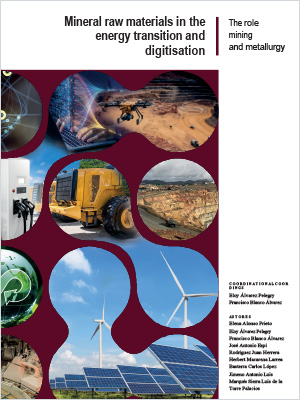
This will be an opportunity to present the recent reports published by three member academies:
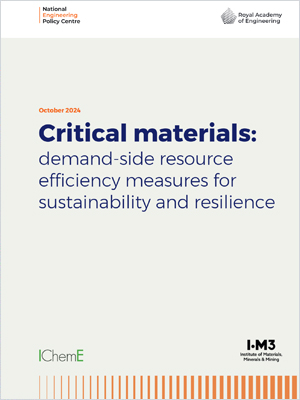
- Royal Academy of Engineering – RAEng (UK)
Critical Materials: Reducing Demand and Ensuring Sustainability
Keyne Walker/Isabella Stevens, Policy Advisor Climate and Sustainability, RAEng
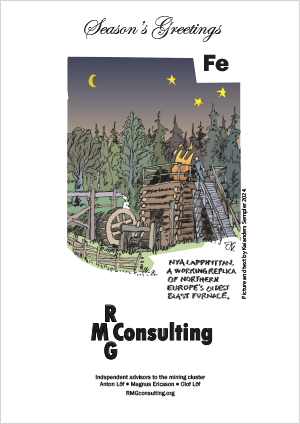
Download file - Royal Swedish Academy of Engineering Sciences – IVA (Sweden)
Tapping into the Nordic potential: Swedish Roadmap for metals and minerals
Magnus Ericsson
Download file - Royal Swedish Academy of Engineering Sciences – IVA (Sweden)
International seminar: How can the Swedish mining cluster strengthen Europe’s supply of metals and minerals?
IVA Conference Centre, Grev Turegatan 16, Stockholm
More information - Real Academia de Ingeniería – RAI (Spain)
Mineral raw materials in the energy transition and in digitalization. The role of mining and metallurgy
Eloy Álvarez Pelegry
Download file
The working group led by Tim Chapman has been exploring opportunities for Euro-CASE to provide policy advice to European stakeholders on the topic of critical raw materials (CRMs). The objective is to:
- Raise awareness of the importance of the topic amongst European engineering academies;
- Stimulate pan European collaboration amongst expert engineers to contribute to this important emerging topic;
An internal workshop has been organised on 20.12.2024 with the aim of identifying and defining how to address critical issues related to raw materials and circular economy. The objective was to organise a consultation of academies to gain their insights and suggestions on identifying 6 to 10 crucial areas of current uncertainty. A proposal of follow-up will be proposed to member academies.